

A pool that only feels good for eight weeks a year is the most common disappointment in this whole niche. The water sits a few degrees too cold in June, turns swimmable for a short stretch in high summer, then goes cold again before Labor Day, and the expensive thing in the backyard becomes something the family looks at more than they use. A heat pump is the fix that quietly solves this, and it does it without the running cost that scares people off gas heaters. It pulls warmth out of the surrounding air and moves it into the water, so for every unit of electricity it draws it can deliver four or five units of heat, which is why owners who switch from a gas heater often see their heating bill drop by more than half.
The catch is that a heat pump is a real purchase, usually somewhere between $500 and $4,000 depending on how much water it has to warm, and picking the wrong size wastes money in both directions. Too small and it runs all day and never quite catches up in spring. Too large and you paid for capacity the pool will never call on. We pulled together the units that actually match real backyard pools and spas, sorted them by the size of water they are built for, and matched each one to the situation it fits best. Every model here runs on electricity alone, so there is no gas line to run and no propane tank to babysit.
Our Quick Picks for the Best Pool and Spa Heat Pumps
- Best overall for most above-ground pools: FibroPool FH255 55,000 BTU
- Best plug-in unit with no 240V wiring: XtremepowerUS 14,800 BTU 115V
- Best small heat pump for spas and stock tank pools: FibroPool FH120 20,000 BTU
- Best value for a mid-size pool and spa: XtremepowerUS 53,000 BTU Titanium
- Best for heating and summer cooling: VEVOR 51,200 BTU
- Best for a full-size inground pool: Hayward HeatPro W3HP21004T 95,000 BTU
- Best for large or cold-climate pools: Hayward HeatPro W3HP21404T 140,000 BTU
How the Heat Pumps Compare at a Glance
| Heat Pump | Heat Output | Power | Best For | Approx. Price |
|---|---|---|---|---|
| FibroPool FH255 | 55,000 BTU | 240V | Pools up to 10,000 gal | $1,000 to $1,300 |
| FibroPool FH120 | 20,000 BTU | 240V | Spas, small above-ground pools | $700 to $850 |
| XtremepowerUS 14,800 BTU | 14,800 BTU | 115V plug-in | Pools up to 4,000 gal | $450 to $600 |
| XtremepowerUS 53,000 BTU | 53,000 BTU | 240V | Mid-size pools and spas | $900 to $1,150 |
| VEVOR 51,200 BTU | 51,200 BTU | 240V | Heating and cooling, up to 15,000 gal | $850 to $1,100 |
| XtremepowerUS 137,000 BTU | 137,000 BTU | 240V | Large inground pools on a budget | $1,900 to $2,400 |
| Hayward HeatPro 95,000 BTU | 95,000 BTU | 240V | Full-size inground pools | $2,800 to $3,500 |
| Hayward HeatPro 140,000 BTU | 140,000 BTU | 240V | Large or cold-climate pools | $3,700 to $4,300 |
Prices move around with the season and the seller, so treat those numbers as a planning range rather than a quote. The heat output column is the figure that should drive the decision, and the buyer’s guide further down explains how to turn your pool’s gallon count into the BTU number you actually need.
The FibroPool FH255 Is the Heat Pump Most Above-Ground Pool Owners Should Buy First
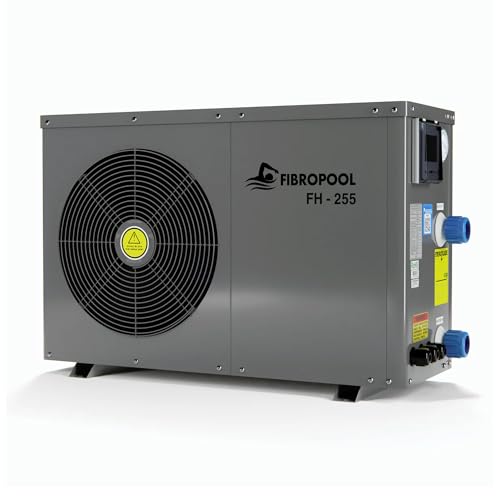
If you have a normal above-ground pool in the 8,000 to 10,000 gallon range, this is the unit we point people to before anything else. The 55,000 BTU output is enough to hold a comfortable temperature through spring and fall without running around the clock, and FibroPool builds it around a titanium heat exchanger, which is the part that matters most for corrosion resistance when chlorinated or salt water is passing through it every day. The digital control panel is simple, you set a target temperature and the unit cycles to hold it, and the whole thing runs off a standard 240V circuit. Owners report a rated COP near 5.9 in ideal conditions, meaning close to six units of heat for every unit of electricity, though real-world efficiency drops as the outside air gets colder.
It is not a cold-weather miracle worker. Once the air drops below roughly 45 degrees the output falls off, which is true of every air-source heat pump, so this is a shoulder-season extender rather than a January heater in a cold climate. For its price and size it is the most sensible starting point for the majority of backyard pools.
Pros
- Titanium heat exchanger resists salt and chlorine corrosion
- Strong rated efficiency near COP 5.9
- Right size for typical 8,000 to 10,000 gallon pools
- Simple set-and-hold digital control
Cons
- Needs a dedicated 240V circuit
- Output drops in colder shoulder-season air
The verdict: Buy it if you own a standard above-ground pool and want one heat pump that covers the widest range of situations without overthinking it.
The XtremepowerUS 14,800 BTU Plug-In Skips the Electrician Entirely

Almost every heat pump on this list needs a 240V circuit run out to the equipment pad, and that electrician visit can add several hundred dollars to the real cost. This one sidesteps that. It plugs into a standard 115V household outlet, and for a small pool up to about 4,000 gallons that is all the power it needs. Think of the intex-style round pools, the smaller framed pools, and stock tank setups where the water volume is low enough that a modest unit can keep pace. It uses a titanium heat exchanger like the bigger models, so the corrosion resistance is there even though the price is not.
The tradeoff is patience. At 14,800 BTU it warms slowly, so give it a day or more to bring a cold pool up to temperature the first time, then let it hold from there. For a small backyard pool that a family actually uses, the convenience of no special wiring is worth the slower warm-up. If your pool is larger than about 4,000 gallons, size up instead of asking this one to do work it cannot.
Pros
- Plugs into a standard 115V outlet, no 240V wiring
- Lowest entry price on this list
- Titanium heat exchanger for salt and chlorine
- Right match for small and stock tank pools
Cons
- Slow to warm a cold pool the first time
- Only suitable for pools up to about 4,000 gallons
The verdict: Buy it for a small above-ground or stock tank pool where avoiding an electrician matters more than fast heat-up.
The FibroPool FH120 Is the Right Size for a Spa or a Small Pool

A 20,000 BTU heat pump sounds small next to the big inground units, and that is exactly the point. Matched to a spa or a small above-ground pool, the FH120 holds temperature efficiently instead of short-cycling the way an oversized unit would. It carries the same titanium heat exchanger and weatherproof steel cabinet as its larger FibroPool siblings, so the build quality does not drop with the size. For anyone running a small spa alongside a bigger pool heater, or heating a compact plunge pool, this is a clean match to the load.
Push it onto a full-size pool and it will disappoint, running constantly and never quite winning. Keep it on the small water it was built for and it is efficient and quiet. It still needs a 240V circuit despite the low output, so factor that in if the spa pad does not already have one.
Pros
- Correctly sized for spas and small pools
- Titanium exchanger and weatherproof cabinet
- Efficient hold without short-cycling
- Same build quality as larger FibroPool units
Cons
- Too small for a full-size pool
- Still requires a 240V circuit
The verdict: Buy it to heat a spa, plunge pool, or small above-ground pool where a big unit would be overkill.
The XtremepowerUS 53,000 BTU Delivers Mid-Size Heat Without the Premium Price
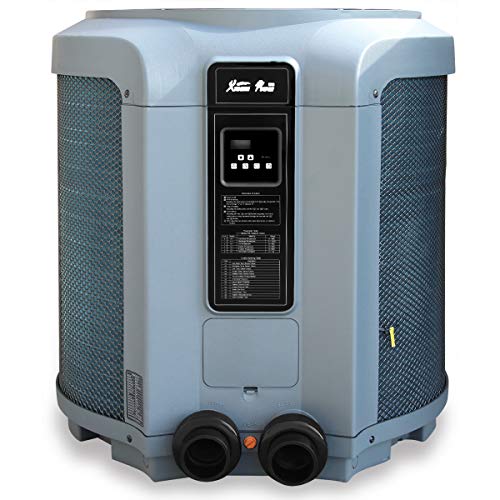
This is the value play for a mid-size pool. At 53,000 BTU it lands right next to the FibroPool FH255 on paper, and it is rated for both pool and spa duty, but it usually sells for less. XtremepowerUS leans on a titanium heat exchanger and markets the unit on quiet operation, and for owners who want the FibroPool’s capability at a lower entry point it is a genuine alternative. The digital display handles temperature setting the same way the pricier units do.
The reason it sits below the FibroPool as our pick rather than above it comes down to the track record. FibroPool has a longer, steadier reputation for support and parts, and on a purchase you want running for a decade that matters. If budget is the deciding factor, though, this unit gives up very little on day-one performance.
Pros
- Pool and spa rated at a lower price than rivals
- Titanium heat exchanger
- Quiet operation for the class
- Straightforward digital temperature control
Cons
- Support and parts network less established than FibroPool
- Cold-air output falls off like all heat pumps
The verdict: Buy it when you want mid-size heat-pump capability and the lowest price matters more than a long support history.
The VEVOR 51,200 BTU Heats in Spring and Cools the Water in Peak Summer
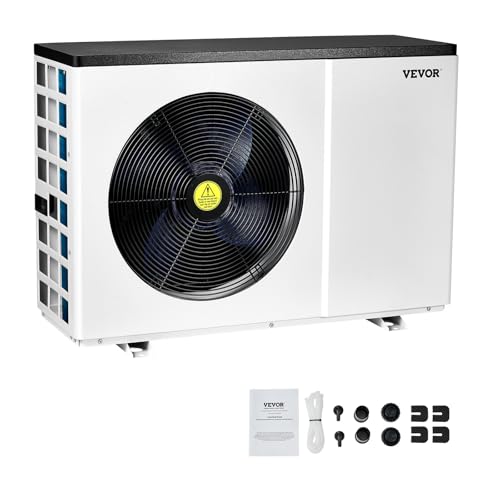
Most heat pumps only push heat one direction. This VEVOR runs both ways, which is the feature that sets it apart. In spring and fall it warms the water like any other unit, and in the dead of summer, when a pool in full sun can climb past 90 degrees and stop being refreshing, it reverses and pulls heat out instead. For a pool in a hot climate that gets uncomfortably warm in July, that cooling mode is genuinely useful and hard to find at this price. It is sized for pools up to roughly 15,000 gallons and runs on 240V.
VEVOR is a value brand, and the usual caveats apply, with a support experience that can be less polished than the established pool names. But for the specific buyer who wants both heating and cooling in one box, there is not much competition at this price, and the core hardware does the job.
Pros
- Heats and cools, rare at this price
- Sized for pools up to about 15,000 gallons
- Useful cooling mode for hot-climate pools
- Standard 240V install
Cons
- Value-brand support can be uneven
- Cooling adds complexity most cool climates never use
The verdict: Buy it if your pool overheats in summer and you want one unit that warms in spring and cools in July.
The Hayward HeatPro 95,000 BTU Is the Inground Workhorse Built to Last
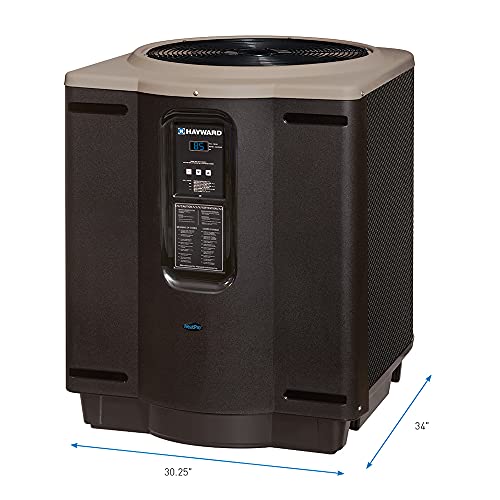
Once you move from an above-ground pool to a full-size inground one, the water volume jumps and the small units stop being able to keep up. This is where Hayward earns its reputation. The HeatPro 95,000 BTU is built for inground pools in the 15,000 to 20,000 gallon range, and Hayward’s titanium heat exchanger and corrosion-resistant cabinet are engineered for the long haul, which is why you see these units still running a decade after install. It is a serious piece of equipment with a price to match, and the warranty and parts support behind the Hayward name are part of what you are paying for.
The install is a real project. You will want a licensed electrician for the 240V hookup and enough clear space around the unit for airflow, since a starved heat pump loses efficiency fast. Get the setup right and this is a set-it-and-forget-it heater for a proper backyard pool.
Pros
- Built for full-size inground pools
- Hayward titanium exchanger and long service life
- Strong warranty and parts support
- Holds temperature reliably across the season
Cons
- High upfront cost
- Needs professional 240V install and clear airflow space
The verdict: Buy it for a full-size inground pool where longevity and support are worth the premium.
The Hayward HeatPro 140,000 BTU Handles Big Pools and Colder Climates
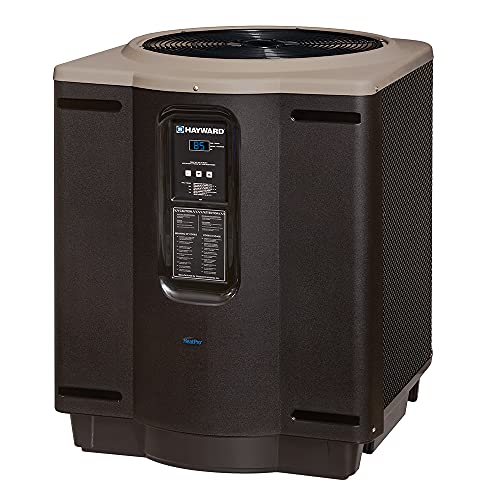
The largest unit here exists for two situations, a genuinely big inground pool over about 20,000 gallons, or a pool in a cooler climate where the season is short and you want to push it open earlier and closed later. At 140,000 BTU it moves heat fast, so it recovers a cold pool in a fraction of the time a smaller unit would, and it holds temperature against bigger heat losses. Everything good about the 95,000 BTU Hayward carries over, the titanium exchanger, the durable cabinet, the support network, just scaled up.
You pay for that capacity, both at purchase and in the electrical service it demands, so this is not the unit to buy as insurance if a mid-size heater would cover your pool. Match it to a pool that truly needs the output. For the right large pool it is the difference between a two-month season and a five-month one.
Pros
- Highest output for large pools
- Fast recovery from a cold start
- Extends the season in cooler climates
- Full Hayward durability and support
Cons
- Expensive to buy and to run
- Overkill and wasteful on a mid-size pool
The verdict: Buy it for a large inground pool or a shorter northern season where maximum output actually pays off.
The XtremepowerUS 137,000 BTU Brings Big-Pool Output at a Lower Price
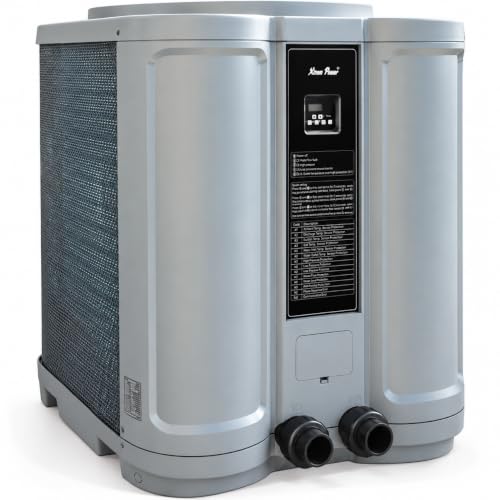
If your pool needs serious BTU but the Hayward’s price makes you wince, this is the budget route to high output. At 137,000 BTU it lands close to the big Hayward on paper and is rated for both above-ground and inground pools plus spa duty, at a price that usually sits well below the name-brand equivalent. For a large pool where the priority is getting the water warm rather than buying the longest warranty on the market, it is a lot of heating for the money.
The honest tradeoff is the one that runs through every value brand on this list. The support network and long-term parts availability are not on the level of Hayward, so you are trading some peace of mind for the lower sticker. If you are comfortable with that trade and want maximum output per dollar, this unit delivers it.
Pros
- High 137,000 BTU output for large pools
- Rated for pools and spas
- Well below name-brand price for the capacity
- Titanium heat exchanger
Cons
- Support and parts weaker than Hayward
- Big electrical demand like all high-output units
The verdict: Buy it for a large pool when raw output per dollar matters more than a premium support network.
How to Choose the Right Pool Heat Pump for Your Backyard
Start With Your Pool’s Gallon Count, Not the BTU Number
The single most common sizing mistake is shopping by BTU before you know how much water you are heating. Work it the other way. Find your pool’s volume in gallons first, then match it to the output. As a rough guide, small pools and spas under 5,000 gallons are happy with 14,000 to 20,000 BTU, mid-size above-ground pools around 8,000 to 12,000 gallons want 50,000 to 55,000 BTU, and full-size inground pools from 15,000 gallons up need 95,000 BTU and beyond. Colder climates and pools without a cover should size up a step, because both bleed heat faster than the calm, covered pool the ratings assume.
Understand What COP Really Tells You
COP, or coefficient of performance, is the efficiency number every heat pump advertises, and a figure near 5 or 6 means the unit delivers five or six units of heat for every unit of electricity it draws. That is the whole reason a heat pump beats a gas or electric-element heater on running cost. The important footnote is that COP is measured in warm air, and it falls as the temperature drops, so the rated number is a best case. Every air-source heat pump slows down once the outside air heads below the mid-40s, which is why we describe these as season extenders rather than winter heaters in a cold climate.
Plan the Electrical Work Before You Buy
Most of these units need a dedicated 240V circuit, and that wiring is a real line item that people forget when they compare prices. If your equipment pad does not already have the service, budget for an electrician before you fall in love with a specific model. The one exception here is the 115V plug-in XtremepowerUS, which trades slower heating for the ability to run off a normal outlet. For everything else, confirm the amperage the unit calls for and make sure your panel can carry it.
A Cover Does More for Your Heating Bill Than a Bigger Unit
An uncovered pool loses most of its heat overnight through evaporation off the surface, and no heat pump, however large, wins that fight cheaply. A solar cover or blanket is the highest-return accessory you can pair with any unit on this list, often cutting heating cost by a third or more simply by trapping the warmth you already paid for. Before sizing up to a more expensive heat pump, put a cover on the pool and see how much less heater you actually need.
Pool Heat Pump Questions We Hear the Most
How long does a pool heat pump take to warm the water?
From a cold start, expect 24 to 72 hours to bring a pool up to a comfortable swimming temperature, depending on how well the unit is matched to the water volume and how warm the outside air is. Once the pool is at temperature, the heat pump only has to replace the heat lost overnight, so day-to-day it cycles far less. A solar cover shortens both the initial warm-up and the daily hold.
Can a heat pump heat a pool in winter?
In a mild climate where daytime air stays above the mid-40s, yes, it can hold a pool through much of the year. In a cold climate with freezing air, no, an air-source heat pump loses efficiency and eventually cannot pull enough heat from the air. That is a physical limit of the technology, not a fault of any one unit, which is why we call these season extenders rather than true winter heaters up north.
Is a heat pump cheaper to run than a gas pool heater?
In almost every case, yes, and often by a wide margin. Because a heat pump moves existing heat instead of burning fuel to create it, it delivers several units of heat per unit of electricity, while a gas heater is always under one unit of heat per unit of fuel. The heat pump costs more up front, but the running-cost gap usually pays back that difference over a few seasons.
Do these heat pumps work with saltwater pools?
Yes. Every unit on this list uses a titanium heat exchanger, which is the specific part that resists the corrosion salt water would otherwise cause. If you run a saltwater system, confirm the exchanger is titanium before buying any heat pump, and these all qualify.
What size heat pump do I need for my pool?
Match it to gallons. Under 5,000 gallons, look at 14,000 to 20,000 BTU. Around 8,000 to 12,000 gallons, 50,000 to 55,000 BTU. From 15,000 gallons up, 95,000 BTU or more. Size up a step for a cold climate or an uncovered pool, since both lose heat faster than the rating assumes.
For most backyards, the decision comes down to water volume. If you own a standard above-ground pool, the FibroPool FH255 is the unit to buy, it is correctly sized, corrosion-resistant, and priced where it should be. Step down to the FH120 or the 115V XtremepowerUS for a spa or a small pool, and step up to the Hayward HeatPro line only when a full-size inground pool genuinely calls for that output. Whichever one fits your pool, pair it with a solar cover from day one, because the cheapest degree of heat is always the one you keep instead of the one you buy again every night.
Last update on 2026-11-10 / Affiliate links / Images from Amazon Product Advertising API
This post contains affiliate links, which means I may receive a small commission, at no extra cost to you, if you make a purchase using these links.


