


Do you like your BBQ meat to have a smoky flavor? Summer is quickly approaching, so it’s time to clean your grill and prepare for outdoor BBQ gatherings. Add some wood chunks or chips to your barbecue to take your BBQ to the next level.
Wood chips are used to smoke ribs, giving them a rich, smokey flavor and aroma. The most crucial thing to accomplish is figuring out which wood flavor to utilize because different wood bits bring out different flavors on ribs.
Fruit-flavored wood chips, such as peach, apple, and cherry, impart a delicate flavor to the ribs. For a stronger smokey flavor, pecan, oak, hickory, and mesquite chips are ideal for giving ribs that enticing ‘high street’ restaurant flavor.
Here are the top wood chips on the market today to make your grilling season more pleasurable and delicious.
Table of Contents
Best wood for smoking ribs
Big Green Egg Smoking Chips – Best apple wood for smoking ribs

The Big Green Egg is the first on our list of the best wood for smoking ribs, and they are well-known for their high-end BBQ grills. They also have their brand of wood pieces, each with a different flavor, to give your ribs a smoky flavor.
Quality of wood
The most frequent wood chips for ribs are Big Green Egg apple wood chips. It’s constructed entirely of excellent natural applewood. It’s a must-have for everyone who owns a gas, charcoal, or electric grill.
Pests, rot, and mold have been treated out of the applewood. As a result, you can rest assured that your chips will stay fresh for a long time while you wait for the next grilling session.
Size
These huge-sized apple BBQ smoking chips come in a massive 2.9L bag and measure roughly 180 cubic inches. These are the perfect size chips that burn slowly, generating rich flavor smoke over time and leaving a sweet apple aroma on your ribs.
These apple chips give out a deep smoke with a somewhat sweet, fruity flavor that’s perfect for chicken, pork ribs, and game meat.
However, if you use applewood chips, remember that your smoked ribs may turn a dark brown, which is quite normal. You can soak it in water for 30 minutes for a more effective and vibrant flavor, then add it to your grill charcoal or sprinkle it over to offer your ribs the maximum taste experience.
You may make your mix using herbs and your favorite BBQ sauce for a consistent taste and scent. These applewood chips are created in the United States and do not include any addictive or harmful ingredients.
The smoky flavor is unmistakable when you use Big Green Egg applewood chips in your smoker cooker. These chips, made from all-natural apple trees, may infuse your ribs with a delectable mild and sweet flavor that will have you begging for more. We strongly advise you to smoke pork.
Pros
- It gives your ribs a smokey, fruity flavor.
- It’s made entirely of natural apple wood and has no addictive ingredients.
- Wood chips of a standard size
Cons
- Produces lighter smoke
- It’s possible that the rich brown hue it gives your meat isn’t to your liking.
Western Premium BBQ – Best special recipes for smoking wood chunks

Cherry wood chips are a good choice for making exceptional meals with smoked meat. Cheery has a sweet and sour flavor with a mild flavor that won’t change the taste of your ribs. As a result, it’s one of the most popular wood chunks on the market because it goes with just about anything you can grill.
Quality of wood
Being the BBQ hero gives your friends and family the rich flavor they deserve. Western Premium BBQ Cherry wood chunks are created in the United States from all-natural cherry wood and may be used on gas, electric, and charcoal barbecues, as well as on your smoker.
The best quality of wood is Western Premium BBQ Cherry. The wood has been seasoned and treated to prevent rot, bugs, and mold from causing damage to the wood chunks.
Furthermore, you may preserve the chunks for longer and use them while hosting a BBQ party or a family gathering. Excellent quality pieces that are perfect for outdoor grilling.
Size
Each container contains 549 cubic inches of uniformly proportioned pieces.
However, when full of cherry pieces, the bag weighs 7.6lbs, which is enough for three to five BBQ sessions, depending on the size of your meat and grill or smoker.
Small chips are included in the packaging, which catches fire fast to make smoke and ignite larger portions. The large chunks of cherry wood burn slowly, generating a rich, fragrant smoke and scent that allows your ribs to cook perfectly and for longer.
Western Premium BBQ Cherry is gentler than apple and produces a mild and sweet flavor that is ideal for ribs or brisket. Because the wood pieces are taken from real cherry wood and subsequently dried, the distinct sweet and sour flavor is free of any additives.
Although the box recommends against soaking them, you can if you prefer milder meat.
According to customer feedback, adding a handful of cherry pieces throughout the smoking process gives your ribs the mild flavor you desire. To cook your ribs properly, equally distribute the wood chips on the grill or smoker, then close the lid and let the sweet, smoky cherry flavor soak in.
Western Premium BBQ Cherry is one of the greatest cherry wood smoking wood chunks available. Compared to other pricey brands of wood chips, this brand is significantly less expensive. Perfectly aged to impart a fruity and light flavor to whatever you choose to prepare.
Pros
- The highest grade pieces
- There are no additives
- It goes well with a wide range of meats
- Competition is really popular
Cons
- The size of the chips can be uneven at times.
Camerons Products Smoking Wood- Best professional chef smoking wood chunks
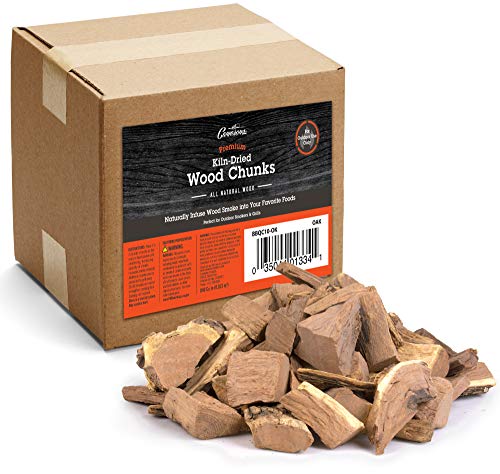
Cameron Products, the pioneer in smoking products for household and commercial usage, introduces Oak wood chunks. Cameron’s oak can be used almost everywhere, whether you want to barbecue outside or inside. Professionals employ oak in industrial smoking for various meat products, primarily sausages.
Quality of wood
Oak is one of the most popular smoking woods, and its flavor is unmistakable. Wood chunks are kiln-dried and chopped into little chunks of natural white oak hardwood.
There are no additives or other chemicals in the wood pieces, which is good for the environment and your health.
They produce a rich smoky flavor when used with beef, pig, game, and poultry. They’re the greatest grade oak wood chunks in all Cameron’s products because they’re carved from raw timber.
Size
Precision cutting this Cameron’s wood piece is neither too small nor too enormous for your BBQ. However, because they are made of different types of natural oak wood, the density of the wood varies, impacting the bag’s size. The bag weighs roughly 10 pounds when packed with wood chunks, which is plenty of wood to start your BBQ smoking.
To add a smoky flavor to your ribs, combine Cameron’s wood chunks with cherry wood, a moderate hardwood.
It is recommended that you soak them for at least 20 minutes before adding them to your hot charcoal grill for the best performance and rich, delectable smoking flavor.
Cameron’s products are without a doubt the best in the industry when it comes to smoking cooking appliances. These large applewood chunks, packed with great care and consideration for your BBQ demands, can function excellently in cooking your special cuisine. This, I tell you, may just be what you’re looking for.
Pros
- Natural white oak wood was used to create this piece.
- Chemicals and additives are not used.
- For optimum results, combine with cheery
Cons
- Does not burn clean
- Sizes differ
Oklahoma Joe’s – Best for smoking wood logs for larger BBQ
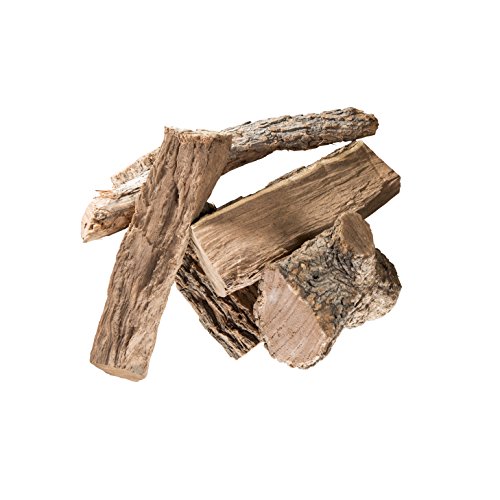
For those who enjoy smoking, this miniature wood log is well worth the money. They’re best for huge BBQ projects or when you want your meat to smoke for longer. Hickory produces a long burn that the meat absorbs for a rich flavor.
Quality of wood
Hickory wood goods that have been dried. All-natural wood logs are a good choice for smoking various meat products. These wood logs from the South offer a great smoky flavor without any additions.
This Oklahoma Joe’s mini-log can be used to smoke ribs on a smoker or charcoal grill. Hickory wood imparts flavor to your ribs by emitting a rich sweet aroma that most people associate with bacon.
Size
We may say that this Oklahoma wood chunk or chips are the best of all the top selections in our list of wood chunks or chips. Joe’s small log is a good size. They are not, however, full-sized logs. This log is average in size, measuring 6” to 8” long, and there are usually about 14 logs in the box.
If you have a Weber kettle, you should invest in an ax. You’ll need to chop them into the appropriate size for your grill. A whole package of cigarettes weighs 25 pounds, which is enough to smoke for longer.
Ribs, brisket, sausage, and turkey may all be smoked using this device. In comparison to other forms of wood pieces, it is reasonably priced. Large logs are best suited for larger cookers with longer cooking times.
Oklahoma Joe’s small log is the greatest choice for a smoky bacon flavor. This would come in the highest quality and size that burns for a longer time and is used to smoke a range of hickory and red meat. It’s ideal for large-scale smoking events. I strongly recommend this to anyone looking for high-quality hickory wood and ready to pay a bit more.
Pros
- It’s great for smoking for longer periods of time
- The sweet, smokey flavor is 100% natural and has no additives
- Burns clean
Cons
- It can be pretty costly
Traeger Grills – Best wood pellets for smoking ribs
The Traeger grills PEL305 mesquite should be your best choice if you’re searching for a pellet grill that burns cleanly and is environmentally safe. The greatest smoke for ribs can be made from 100 percent hardwood with no additional fillers or chemicals.
Quality of wood
The wood used to make the mesquite pellet grill is all-natural hardwood. Because no unnatural additions or fillers are used, you can count on a consistent product. It is for this reason that this product has unrivaled flavors.
In reality, the superb pure mesquite flavor is infused by this quality of wood. The woody flavor will permeate your meals, regardless of how you prepare them.
Whether you’re roasting, baking, grilling, smoking, or braising, the wood-fired flavor and scent of mesquite will infuse your cuisine with a unique aroma. It’s an excellent wood for cooking shellfish, wild game, beef, and poultry.
Production process
Traeger’s mills are in the United States. They are the mills’ primary owners and operators, and they control the entire operation from start to end.
They ensure that stringent criteria and instructions are followed to generate high-quality pellets with optimum smoke.
The pellets are made with a unique method that assures each pellet is of the greatest possible quality. The majority of the wood used in this technique is oak and alder. After that, the wood is coated with wood oil derived from flavoring wood.
Traeger created the “gold standard” in the process of producing pellets to generate the finest quality pellets. The greatest pellets on the market were created using this particular pelletizing method.
Traeger pellets are made with just the right amount of moisture content. This allows the pellets to have a consistent, clean burn that produces excellent blue smoke.
Sustainable sourcing
Traeger collects sawdust from clean, green hardwoods that have already been removed. They make high-quality pellets out of sawdust. They make their pellets without ever cutting down a single tree. It’s also built so that it burns cleanly and creates less ash.
The PEL305 Mesquite from Traeger Grills is a high-quality product. Most barbecues and smokers may use its pellets. They are suitable for use in gas, electric, and wood smokers. To avoid turning your pellets into sawdust, it is advised that you do not soak them.
Pros
- A strong smoky flavor is present
- Produces a large amount of rich, sweet-tasting smoke
- Grilling-friendly
- Burns quickly and hot
Cons
- It’s not uncommon to come across a slew of nasty characters.
What are the different types of woods for smoking ribs?
For all of your smoking needs, wood comes in a range of tastes and cuts. Let’s begin by reducing the number of woodcuts available.
Pellets
- Think Traeger or PitBoss – is the heat and smoke source for pellet barbecues.
- Most pellets are made from 100% hardwood that has been kiln-dried, ground into sawdust, and compressed into a pellet shape.
- The only stipulation is that you already own a pellet grill.
Chips
- Small, thin strips of wood are commonly used as wood chips. You can choose from a range of flavors.
- Because of their diminutive size, they can be used in almost any style of grill or smoker to give your ribs that extra taste boost.
- Because the rib meat can only absorb so much smoke, I recommend adding wood chips when smoking ribs. There’s no need to throw away your wood bits.
Chunk
- When utilizing a smoker, wood pieces are an excellent choice for most meats, including ribs.
- Wood chunks three to four inches burn for longer than wood chips and can be used as a heat source or mixed with charcoal.
- Save the chunks for larger portions of meat because they are usually a little more expensive than chips, and you won’t notice much difference.
Wood logs vs. smoking chunks vs. smoking chips: which is best for ribs?
To smoke ribs, choose from three types of wood: cooking wood logs, smoking chunks, or smoking chips. Cooking wood logs are made of tasty wood species sliced into small to medium-sized logs. Smoking chunks are flavorful wood blocks (usually less than 2 inches long).
Smoking chips, on the other hand, are smaller and thinner chunks of delicious wood. Cooking wood logs burn the longest of the three possibilities, but they don’t emit as much smoke as smoking pieces or chis. To get the maximum flavor and softness out of your ribs when smoking them with cooking wood logs, use either smoking chunks or smoking chips.
How to select the right wood for your smoker?
There are many different types of wood available on the market that can give your smoked meat a unique flavor. One of the most frequently asked questions among BBQ enthusiasts is how to choose the right sort of wood.
A vast number of these woods are available both online and in local places.
The most important aspect, though, is determining which sort of wood is ideal for a specific type of meat.
Before deciding on the best wood for ribs, here are some things to consider.
What size wood? Logs, chunks, chips, pellets, or dust?
You might not know the type of wood to use for your ribs if you’re new to smoking. Is there any difference? How do I make a decision?
It’s simple: just look below to see what wood goes in which smoker.
Logs
If you have a large offset smoker, these large pieces of wood should go in your big, terrible firebox. Hardcore DIYers can also use logs with smoker pits.
Chunks
Chunks, which resemble logs but are considerably smaller, are ideal for tiny offset smokers, drum or barrel smokers, or ceramic or kamado burners. Simply place a few chunks on top of the charcoal and let the fire do the rest.
I’ve never done it, but I’ve heard of people putting bits of wood on top of their gas grill’s heat deflectors. It’s a brilliant method for producing smoke on a gas barbecue. It’ll most likely avoid your warranties, but it’s worth a go if you have an older unit.
Chips
These thinly sliced real hardwood morsels are simple to fire and produce a lot of smoke. They’re common in propane, electric smokers, and charcoal grills. If you want to smoke, try these in a foil pack or smoker box on a gas grill.
Pellets
Don’t throw anything out, and don’t go hungry. Pellets are made from little fragments of wood left over from milling and are used in pellet grills. Pellets, like wood chips, can be used in smoker boxes on gas barbecues to provide a hint of smoke to your cooking.
Sawdust
This fine, powdered wood will readily smoke even when not in direct touch with a flame. Sawdust is sometimes used in electric smokers because of this, although it can also be used in a smoke gun or other portable smoker.
Quality & type of wood
In addition to purchasing any hardwood that produces a pleasant smoke, look for quality in the wood when purchasing the correct wood for smoking.
Natural wood is free of resins, additives, barks, and other pollutants that would cause hazardous smoke that could hurt your health.
Your ribs should have the right smoke to achieve a sweet, smokey flavor. Remember that choosing the best grade of wood for smoking is just as important as choosing the right kind of wood for the food you’re going to smoke.
Type of flavor
The appropriate kind of wood chips is required to provide the optimum smoky flavor in ribs, lamb, or chicken. Artificial flavors can be used to season BBQ steaks, but they will have a completely different flavor than using genuine wood.
Let’s look at some of the most well-known tree flavors.
Mesquite wood
- This type of wood can be found in the United States. Mostly found throughout the southwest United States. It’s the most powerfully flavored wood, becoming increasingly popular due to its intense burns and restaurant-style smoky flavor. Grilling meat is the best way to use it.
Oakwood
- For smoking red meat, this is a must-have. It does, however, have a robust flavor that is not overbearing.
Hickory wood
- It burns cleanly, leaving your meat with a subtle flavor and a powerful presence on the ribs. Ribs, brisket, sausages, and turkey benefit from its powerful smoky flavor.
Cherry wood
- It has a sweet fruity flavor that goes well with nearly anything. It’s highly smoky, so it’s not for those who don’t like strong sweet flavors.
Applewood
- Provides a subtle flavor with a hint of fruity sweetness to your food. Pork and fowl meat work well together. When used to smoke ribs or chicken, though, it turns a dark brown hue, which isn’t a problem.
Pecan
- It has a mellow, nutty flavor that goes nicely with hickory.
Maple
- It’s ideal for a pleasant and gentle smoke layer.
Conclusion
Similarly, you ensure that you spend a significant amount of money on premium cuts by considering the significance that the type of wood has in the smoking process. The sort of food to be smoked and the flavor you want it to have played a big role in selecting the correct and the best wood for smoking ribs.
It’s up to you to choose the appropriate wood depending on taste and preference, considering the wood’s flavor, quality, and size. You may buy them online or in a local store, but make sure they are of the highest quality, free of fillers and additives.
Last update on 2024-04-05 / Affiliate links / Images from Amazon Product Advertising API
This post contains affiliate links, which means I may receive a small commission, at no extra cost to you, if you make a purchase using these links.
