

A half-empty bottle of barbecue sauce sitting in the fridge door after a cookout is usually where this question starts. The ribs and the chicken thighs already got their turn. What that bottle can still do for chili, a pulled pork sandwich, grilled corn, or a pan of baked beans is the real question, and so is the part most articles skip over: how to actually get that glaze onto food without it turning into a black, bitter crust. This guide covers both, food by food, plus the two tools that turn the timing from a guessing game into something repeatable.
Barbecue sauce is a blend of tomato or vinegar base, sugar in the form of molasses, honey, or brown sugar, and spice. That sugar is exactly why sauce burns so easily on a hot grate, and it is the single biggest reason people default to ribs and chicken instead of trying it elsewhere.
The Real Problem Is Timing, Not the Sauce
Sugar caramelizes fast under direct heat, and past a certain point it stops caramelizing and starts scorching. That is the mechanism behind almost every burnt batch of barbecue sauce, and it has nothing to do with the sauce being bad or the grill being too hot in general. It is a timing problem.
- Apply sauce in the last 5 to 10 minutes of cooking, never at the start. Raw or half-cooked food sits over heat far longer than sauce can tolerate.
- Move the food to indirect heat, or drop the burner under it, right after brushing on sauce. A two-zone setup makes this easy since the food can finish glazing away from direct flame.
- Thin thick sauce with a tablespoon of water, vinegar, or fruit juice before brushing it on. A thinner layer sets and caramelizes evenly instead of pooling and burning in one spot.
- Warm the sauce before it touches the grill. A cold, thick sauce straight from the fridge needs more direct heat time to set, which is exactly the extra exposure that turns it bitter.
Get the Timing Right With a Thermometer Instead of Guessing
The “last 5 to 10 minutes” rule only works if you actually know how close the food is to done. On a thin cut like a burger patty or shrimp, that is easy to eyeball. On a pork shoulder, bone-in chicken thighs, or a whole chicken, it is not, and guessing wrong in either direction either scorches the sauce or leaves it barely set by the time the meat is safe to pull.
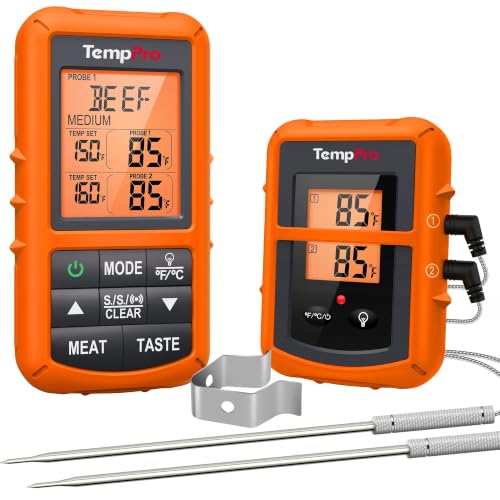
A dual-probe leave-in thermometer like the ThermoPro TP20 solves this without opening the lid to check. Set one probe in the thickest part of the meat and read the remaining temperature gap without lifting the lid, then brush on sauce once the reading hits the window where the last 5 to 10 minutes of cooking begins, rather than opening and closing the grill repeatedly to check by eye. We cover the full case for this kind of setup, along with eleven other tested picks, in our guide to the best digital meat thermometers.
For Thick Cuts, Get Flavor Inside Instead of Just on the Surface
Brushing sauce on the outside of a pork butt, a whole turkey breast, or a thick roast only ever seasons the surface. The center of a cut that size never sees the sauce at all, which is the same limitation a basting brush has on any large piece of meat. Thinning barbecue sauce with a little broth or vinegar and running it through a meat injector gets that same flavor distributed through the middle of the cut instead of leaving it as a coating.
A basic stainless kit, like the Ofargo 304 Stainless Steel Meat Injector Syringe, comes with needles wide enough to pass a thinned sauce without clogging, and it is the same tool worth owning for standard marinades on brisket or turkey. Our roundup of the best meat injectors compares seven options by capacity, needle style, and price if a thin syringe kit is not already in the drawer.
Ten Foods That Take Barbecue Sauce Well Beyond Ribs and Chicken
Each of these pairs a specific food with the sauce style and application method that actually works for it, not just the fact that barbecue sauce exists as an option.
1. Chili
Stir a spoonful of a sweet, smoky sauce into a pot of chili during the last 10 minutes of simmering, not at the start, so the sugar does not scorch against the bottom of the pot. It rounds out the heat from chili powder without masking it, and leftover chili with barbecue sauce mixed in doubles as a topping for hot dogs or a loaded baked potato the next day.
2. Pulled Pork and Pork Chops
Pulled pork takes a vinegar-based Carolina style sauce mixed in after shredding, since the acid cuts through the fat instead of adding more sweetness on top of an already rich cut. Pork chops go the other way. Brush a mustard-based or sweet sauce on in the last few minutes per side, since chops are thin enough to burn a sauce coating fast if it goes on any earlier.
3. Burgers
Barbecue sauce works two ways on a burger. Mixed a tablespoon at a time into the raw ground beef before forming patties, it adds moisture and flavor throughout instead of just on top. Brushed on in the last minute of cooking, it replaces ketchup as a dip for the burger and for the fries next to it.
4. Grilled Corn and Vegetables
Brush a thinned sauce onto corn on the cob or thick vegetable slices only in the final 2 to 3 minutes over direct heat, since vegetables cook fast enough that there is barely a window before the sugar starts to catch. A vinegar-forward sauce holds up better here than a heavy molasses one, which burns almost immediately on vegetables this thin.
5. Shrimp
Shrimp cooks in two to three minutes per side, which leaves almost no margin for a sugary sauce to sit over direct heat. Toss cooked shrimp in warmed sauce off the grill instead of brushing it on while cooking, and it still gets full coverage without the char that a raw or half-cooked piece of shrimp cannot outlast on the grate.
6. Coleslaw
A tablespoon of barbecue sauce whisked into a mayonnaise or vinegar coleslaw dressing adds smoke and a little sweetness without turning the slaw into a sauce puddle. It is a common move on pulled pork sandwiches for a reason. The slaw picks up flavor that complements the meat it sits on top of instead of competing with it.
7. Baked Beans
Baked beans and barbecue sauce share the same base flavors, so stirring in a spicy or sweet sauce during the last 15 minutes of baking deepens the pot without adding a competing flavor. This is one of the few pairings where more sauce is almost always better, since beans can absorb quite a bit before it reads as too much.
8. Pizza and Sandwiches
Swap barbecue sauce in for tomato sauce on a pulled pork or grilled chicken pizza, or use it as the spread on a sandwich in place of mayonnaise. Since it never touches direct grill heat in either case, burning is not a concern here. The only real decision is how sweet or how vinegar-forward to go relative to the toppings.
9. Meatloaf
Barbecue sauce replaces the usual ketchup glaze on top of a meatloaf, brushed on during the last 15 to 20 minutes of oven time so it sets into a sticky top layer instead of baking dry for the full hour. A second thin layer mixed into the meat itself before shaping adds flavor all the way through, the same logic as mixing it into burger patties.
10. Chicken Wings and Thighs
Wings and bone-in thighs are the closest cousin to the ribs and chicken breast pairing everyone already knows, but the timing mistake is the same one that ruins the rest of this list. Cook the chicken most of the way through first, then toss wings in warmed sauce off the heat or brush thighs in the last 5 minutes over indirect heat, checking with a thermometer rather than cutting into the meat to look.
Match the Sauce Style to the Food, Not Just the Recipe
| Sauce Style | Works Best With | Why |
|---|---|---|
| Sweet tomato-based (Kansas City style) | Ribs, wings, burgers, baked beans | Balances rich, fatty cuts and holds up to a short sear |
| Vinegar-based (Carolina style) | Pulled pork, coleslaw, chili | Cuts through fat instead of adding more sweetness |
| Mustard-based (South Carolina style) | Pork chops, chicken thighs | Tang balances leaner cuts without overwhelming them |
| Alabama white sauce | Smoked chicken, turkey | Mayonnaise base stays cool tasting against smoke |
| Spicy or chipotle | Shrimp, grilled corn, tacos | Quick-cooking foods benefit from a sharper flavor hit |
These styles map to the regional traditions they come from, and picking a sauce this way beats grabbing whatever bottle is already open. Our regional guide to American barbecue styles goes deeper into where each one comes from and what else it pairs with.
A Basting Brush or Mop Makes the Timing Easier to Control
A silicone basting brush that can sit directly on a hot grate without melting makes it easier to apply a thin, even layer instead of a thick pool that burns in one spot. For a larger cut like a whole chicken or a rack of ribs, a cotton string mop holds and spreads more sauce per pass, which matters when covering a bigger surface in the same short window before the sugar catches. Either one beats pouring sauce straight from the bottle, which almost always puts down too much in one place.
Working Around Renters, Small Yards, Diets, and Tight Budgets
- No grill or an HOA rule against open flame. An oven broiler gets the same last-minutes caramelization. Cook the food most of the way through, brush on sauce, and broil on the top rack for 2 to 3 minutes, watching it the entire time since a broiler can scorch sugar even faster than a grill.
- Small yard or tabletop grill. Less grate space means less room for a true two-zone setup, so brush on sauce and pull the food to a plate to finish resting rather than trying to hold it over reduced heat on a small grill.
- No thermometer yet. Go by time ranges and visual cues instead, chicken juices running clear and pork losing its pink color, and lean toward brushing sauce on a little later rather than earlier if unsure, since a slightly under-glazed food is an easy fix and a burnt one is not.
- Gluten-free or low sugar needs. Check the label for wheat-based thickeners if avoiding gluten, and look for a mustard or vinegar-based sauce over a heavy molasses one if cutting sugar, since those styles lean on acid and spice rather than a thick sugar base for flavor.
- Vegetarian or vegan cookouts. Every pairing above works the same way on smoked Beyond Meat or other plant-based proteins, since the sauce and the timing rule do not care what the protein underneath is made of.
One more thing worth checking before any of this. An open bottle that has been sitting in the fridge door for months is worth a look before it goes anywhere near food. Our guide on whether barbecue sauce goes bad covers how long an opened bottle actually lasts and the signs it is time to toss it.
Frequently Asked Questions
When should I put barbecue sauce on food while grilling?
In the last 5 to 10 minutes of cooking, after moving the food off direct heat if possible. Applying it earlier gives the sugar in the sauce too much time over heat, and it burns instead of caramelizing.
What foods pair well with barbecue sauce besides ribs and chicken?
Chili, pulled pork, burgers, grilled corn and vegetables, shrimp, coleslaw, baked beans, pizza, sandwiches, and meatloaf all take barbecue sauce well, each with a slightly different sauce style or timing.
How do I keep barbecue sauce from burning on the grill?
Apply it late, over indirect heat when possible, thin it with a little water or vinegar, and warm it before it touches the grill. All four reduce the time the sugar in the sauce spends over direct heat.
Can I use barbecue sauce as a marinade instead of just a glaze?
Yes, but keep raw meat marinating in the refrigerator rather than at room temperature, and do not reuse a marinade that touched raw meat unless it is brought to a full boil first.
Keep one sweet tomato-based bottle and one vinegar-based bottle on hand, brush sauce on in the last 5 to 10 minutes over indirect heat, and use a leave-in thermometer to catch that window instead of guessing by eye. That combination covers every pairing on this list without a single burnt, bitter batch.
Last update on 2026-10-07 / Affiliate links / Images from Amazon Product Advertising API
This post contains affiliate links, which means I may receive a small commission, at no extra cost to you, if you make a purchase using these links.


