

Zucchini usually ends up on the grill as an afterthought, sliced up while burgers or chicken are already cooking on the other side. The real question is rarely “how many minutes exactly.” It is closer to “will this turn out watery and mushy like last time, or will half of it fall through the grates into the coals.” Both of those problems come from choices made before the zucchini ever touches the grate, not from getting the clock wrong by a minute or two.
The quick answer by cut and heat source
These times assume zucchini cut to a consistent thickness. A plank sliced thin on one end and thick on the other will finish unevenly no matter which method below you use, which is the real reason online time estimates for zucchini vary so much. Most guides never say how thick “sliced” is supposed to mean.
| Cut | Heat Source | Time |
|---|---|---|
| Planks, ½ to ¾ inch thick | Gas or charcoal, direct medium-high (400 to 450°F) | 3 to 4 minutes per side |
| Planks, ½ to ¾ inch thick | Electric or tabletop grill | 3 to 4 minutes per side |
| Planks, ½ to ¾ inch thick | Cast-iron skillet, indoors | 4 to 5 minutes per side |
| Rounds or half-moons, in a basket | Gas or charcoal | 5 to 7 minutes total, tossed once or twice |
| Halved lengthwise, whole | Gas or charcoal, indirect then direct | 10 to 12 minutes total |
Why grilled zucchini turns out watery or mushy
USDA FoodData Central lists zucchini at roughly 95 percent water by weight, more than almost anything else that regularly goes on a grill. That water has to go somewhere. If it stays trapped inside the flesh, high heat turns it to steam from the inside out, and the zucchini goes soft and waterlogged before the outside ever really chars.
The fix is the same trick used on eggplant, and most quick zucchini recipes skip it entirely. Salt the cut planks or rounds and let them sit on a wire rack or paper towels for 10 to 15 minutes before they go anywhere near the grill. Salt pulls surface moisture out through osmosis, and you will see beads of water form on the cut faces. Pat the zucchini dry, then oil and season it right before grilling. This single step does more for texture than any change in grill time.
Skip a raw marinade beforehand. Zucchini’s skin does not absorb liquid well before the heat opens it up, so a marinade applied before grilling mostly just adds extra moisture to a vegetable that already has too much. Finish it with vinaigrette, a squeeze of lemon, or a marinade after it comes off the grill instead, when the cut surfaces can actually take on flavor.

How to cut zucchini so it does not fall through the grates
Planks beat rounds for one simple reason: a ½-inch-thick plank is too wide to slip through a standard grate gap, while a round or a small dice almost always is not. Slice medium to large zucchini lengthwise into planks about ½ to ¾ inch thick, or cut it on a diagonal for slightly longer planks that are easier to turn with tongs. If you like the look of rounds or you are dicing zucchini into a mixed vegetable batch, you need a tool between the food and the grate. Our full breakdown on grilling vegetables so they do not fall through the grates covers this for the whole vegetable drawer, not just zucchini, including which cuts need a basket versus a flatter surface.
For zucchini rounds, mushroom caps, and similar chunky cuts, a stainless grill basket with high sides solves the actual problem, keeping pieces from bouncing out while you toss them, while still letting direct flame reach the food through its cutouts. The Weber Deluxe Large Stainless Steel Vegetable Grill Basket works for this because its cutouts are sized to hold standard zucchini rounds without letting them drop through, and it fits both kettle charcoal grills and full-size gas grills.

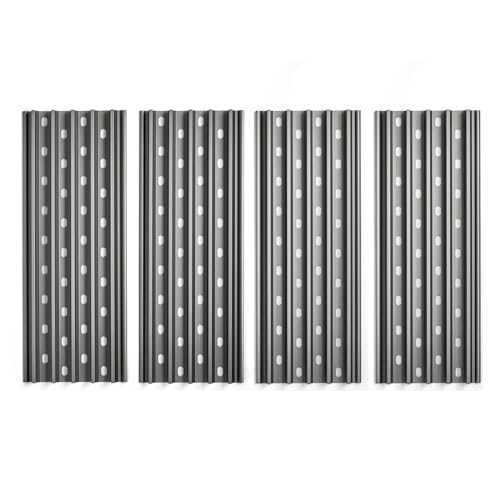
If you are cutting zucchini into thin ribbons with a peeler, a basket’s holes are still too big. GrillGrate interlocking panels sit on top of your existing grates and give you a much tighter surface, so ribbons and thin coins stay put. The panels also route dripping oil into narrow channels instead of straight onto the flame, which cuts down on the flare-ups that scorch zucchini’s high-moisture flesh before it cooks through.
Whichever surface you use, turn zucchini with real tongs rather than a fork. Piercing softened zucchini lets its trapped moisture escape straight onto the coals, which is one more way overcooked, watery zucchini happens. A pair of OXO Good Grips 16 inch locking tongs has a scalloped edge that grips a plank without stabbing it, and the 16-inch length keeps your hand off a basket that has been sitting over direct heat.

Grilling zucchini step by step, by setup
Gas grill
Preheat to medium-high, aiming for 400 to 450°F at the grate. Lay salted, patted-dry, oiled planks directly on the grate, or set rounds into a basket. Cook 3 to 4 minutes per side for planks, until grill marks form and a fork meets slight resistance, not the free slide-through of raw zucchini or the total collapse of overcooked zucchini. Rounds in a basket need 5 to 7 minutes total with one or two tosses.
Charcoal grill
Zucchini planks take on more smoke flavor over charcoal, so 3 to 4 minutes per side is still the target, but keep planks slightly off the hottest coals to avoid a scorched exterior before the inside softens. A basket of rounds runs 5 to 7 minutes over direct coals, shaken partway through.
Electric or tabletop grill
An electric or tabletop grill is the workaround for renters, apartment balconies, and any HOA that restricts open flame or charcoal. Preheat to medium heat, then cook planks 3 to 4 minutes per side. These grills run cooler and more evenly than open flame, so watch for tenderness and light grill marks rather than deep char.
Cast-iron skillet, indoors
No grill, no balcony, no problem. Heat a cast-iron skillet over medium-high on the stovetop until it is just short of smoking, lay in salted and dried zucchini planks, and cook 4 to 5 minutes per side until grill-mark char forms and the zucchini is tender. This is the closest indoor substitute for outdoor char, and it needs nothing you likely do not already own.
How to tell zucchini is done without staring at a clock
Grill marks are not a doneness test on their own. A thick plank can pick up dark grill marks on the outside while the center is still firm and raw-tasting. Slide a fork or the tip of a paring knife into the thickest part of a plank. Raw zucchini resists hard. Properly grilled zucchini gives with slight resistance, like a ripe pear. If the fork slides through with zero resistance, it has gone past done into mush, usually because it went on the grill wet or sat too long over direct heat.

Grilling zucchini with no basket, no yard, or on a tight budget
- No basket or extra gear. Cut planks instead of rounds and lay them directly on the grate, perpendicular to the bars. Regular tongs are all you need, no purchase required.
- Renting, small patio, or an HOA that restricts charcoal. An electric or tabletop grill, or the cast-iron skillet method above, gets you the same result without an open flame or a permanent grill footprint.
- Cooking a mixed batch for a crowd. Cut every piece to the same thickness so it all finishes together. If some pieces are inevitably thinner, like tapered end cuts, add the thicker planks to the grill first and slide the thin ones in a minute or two later.
- Pets underfoot near the grill. A stainless basket stays hot well after the flame is off. Set it somewhere out of reach to cool before a curious dog or cat gets close.
Serving and using leftover grilled zucchini
A drizzle of olive oil, flaky salt, and fresh herbs is enough on its own. For something more filling, top hot-off-the-grill planks with feta or ricotta, or fold diced zucchini into a grain salad. Store leftovers in an airtight container in the refrigerator for 3 to 4 days. Because the salting step already pulled out most of the excess water, leftover grilled zucchini reheats better and turns to less mush than zucchini that went on the grill without it. Dice leftovers into a frittata, toss them through pasta, or blend them into a quick soup instead of tossing them out.
If your current tongs are too short or too flimsy to keep your hand off a hot basket, our 14 Best Grill Tongs roundup breaks down which pairs handle both delicate vegetables and heavier cuts of meat without bending.
Frequently asked questions
Should I peel zucchini before grilling?
No. The skin holds the flesh together on a hot grate and softens fully by the time the inside is tender. Peeled zucchini is more likely to fall apart when you flip it.
Do I really need to salt zucchini before grilling?
If you want real char instead of a soft, watery result, yes. See the moisture section above. It adds 10 to 15 minutes of hands-off resting time and makes the biggest difference in texture of anything in this guide.
Can I grill zucchini in foil instead?
Yes. Cubed zucchini in a sealed foil packet with oil and seasoning takes about 12 to 15 minutes on the grill. It steams rather than chars, which is a fair tradeoff if you are cooking on a rental grill or do not want to buy a basket.
Can you grill frozen zucchini?
Not well. Frozen zucchini releases even more water as it thaws on the grill than fresh zucchini does, and it turns mushy fast. Thaw it fully and pat it dry before grilling, or save frozen zucchini for soups and baked dishes where the extra moisture does not matter.
How long does grilled zucchini keep in the fridge?
3 to 4 days in an airtight container. Reheat gently in a skillet or oven rather than the microwave, which tends to make already-soft zucchini go limp.
Last update on 2026-10-07 / Affiliate links / Images from Amazon Product Advertising API
This post contains affiliate links, which means I may receive a small commission, at no extra cost to you, if you make a purchase using these links.


