

Ground beef renders more fat than a steak, a chicken breast, or almost anything else that lands on a grill grate, and that fat is what turns into a flare-up the moment it hits the flame. For a standard patty, roughly half an inch to three quarters of an inch thick, cooked over direct heat, the answer is to keep the lid open. You need a clear line of sight so you can catch a flare-up and flip before it scorches the crust. Close the lid only when the situation actually calls for it, a much thicker patty, a frozen one, a windy evening, or a fire that will not calm down no matter how often you move the meat.
Why an Open Lid Is the Default for Most Burgers
Direct heat with the lid up is what gives a burger its crust. The exposed flame or coals sear the outside fast, and that browning, the Maillard reaction, is where most of a burger’s flavor actually comes from. Close the lid on a thin or medium patty and the grill starts acting like a small oven. The burger steams a little instead of charring, the cook time stretches out, and the outside never gets that dark, cracked edge that separates a grilled burger from a fried one.
An open lid also keeps you in control. You can see exactly how dark the crust is getting, move a patty half a step to a cooler spot the second grease catches fire, and flip on your own schedule instead of guessing what is happening under a closed dome. For anything under an inch thick, that visibility matters more than the few degrees of extra heat a closed lid would trap.
When Closing the Lid Actually Makes Sense
The exceptions are specific, not a coin flip. Close the lid for a stacked smash-style patty or anything pushing an inch or more in thickness, since the outside will burn before the center catches up if you leave it fully exposed the whole time. Do the same for a patty going on frozen, where extra time is unavoidable and an open lid just dries out the surface while the middle slowly thaws. Wind is its own trigger. A gusty patio pulls heat sideways off an open grill unevenly, so dropping the lid for stretches of the cook keeps the temperature steady enough to actually predict when the burger is done.
The last case is a deliberate two-zone cook. Sear the patty hard over direct heat with the lid open for a minute or two a side, then slide it to the cooler side of the grill, close the lid, and let it finish through with indirect heat. This is the closest a home cook gets to a steakhouse crust without burning the outside on a thick patty, and it only works if the grill actually has a cooler zone to move the burger to.
The Real Reason This Question Comes Up
Most people searching this just watched a burger flare up and panicked, not the other way around. The instinct is to slam the lid down to smother the flame. That is usually the wrong move. Closing the lid on a grease flare-up traps smoke against the meat, coats the crust in an acrid, sooty flavor, and does not put out the fire, since a gas or charcoal grill still has plenty of oxygen circulating inside a closed hood.

The better move is to slide the patties to a cooler part of the grate, or off the flame entirely for 20 to 30 seconds, and let the burning grease consume itself. Keep the lid open while you do this so you can actually see the flame die down. A small spray bottle of water helps knock down a minor flare from rendered fat, but never use water on a genuine grease fire that has climbed up the inside of the grill. For that, close all the vents and the lid together to cut off oxygen, and keep a real fire extinguisher within reach any time you are cooking fatty ground beef over live flame.
The One Tool That Ends the Guessing
Color is not a reliable way to check a burger, especially with the leaner ground beef blends common today, which can look done on the outside while the center is still well under a safe temperature. The USDA sets 160°F as the target internal temperature for ground beef, and the only way to confirm it without cutting the patty open and losing its juices is an instant-read meat thermometer.
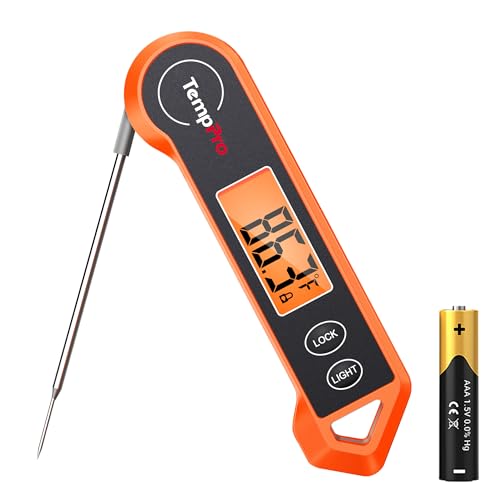
The ThermoPro TP19H is a fit for exactly this situation because it reads in three to four seconds, fast enough to check a patty and get it back over the flame before a flare-up gets out of hand. The magnetic back sticks to the grill cart or the hood itself, so it is already in reach instead of buried in a drawer, and the probe folds flat for storage between cookouts. If you want to compare it against faster and pricier options, our full meat thermometer roundup breaks down read speed and accuracy across a dozen models.
If Your Grill Makes This Decision Harder Than It Should
A single-burner or older two-burner gas grill often cannot give you a real cooler zone, which is exactly why the open-or-closed question feels like a guessing game on that kind of setup. Everything under the lid is roughly the same temperature, so there is nowhere to retreat a flaring patty to except off the grill entirely.

A three-burner grill like the Weber Spirit E-325 solves this directly. Run all three burners with the Boost Burner setting for a hard, open-lid sear, or shut off one burner to create an indirect zone and close the lid over it to finish a thick patty without babysitting the flame. That flexibility is the actual reason a three-burner layout is worth the upgrade over a two-burner grill for anyone who cooks burgers often. Our Weber grill guide covers how this model compares to Weber’s other gas, charcoal, and pellet lines.
Charcoal cooks get the same two-zone flexibility a different way. Bank the coals to one side of a kettle, like the Weber Original Kettle Premium 22 Inch, sear directly over the coals with the lid open, then move the patty to the empty side and close the lid to finish. The top and bottom vents give you the temperature control a gas grill handles with a burner knob.
Renters and apartment dwellers working around an HOA or fire code ban on open flame sidestep this whole question. An electric grill has no direct flame and very little grease flare-up risk, so lid position matters far less. It is a real workaround if live fire simply is not allowed where you live.
FAQ
What internal temperature should a hamburger reach on the grill?
The USDA recommends 160°F for ground beef, checked with an instant-read thermometer inserted into the thickest part of the patty. Color and juice clarity are not reliable substitutes, particularly with leaner blends.
Why do my burgers keep flaring up on the grill?
Ground beef, especially 80/20 blends, renders more fat than steak or chicken, and that fat dripping onto an open flame or hot coals is what causes a flare-up. Moving the patty to a cooler zone briefly, rather than closing the lid, is the safer way to let it die down.
For a normal weeknight burger, standard thickness, direct heat, leave the lid open and watch it closely. Save the closed lid for the real exceptions, extra-thick or frozen patties, high wind, or a deliberate two-zone finish, and let a grill with an actual cooler zone do the rest of the work for you.
Last update on 2026-10-07 / Affiliate links / Images from Amazon Product Advertising API
This post contains affiliate links, which means I may receive a small commission, at no extra cost to you, if you make a purchase using these links.


