🍽️ Recipes & Cooking

Weber Smokey Mountain Temperature Problems and How to Fix Them

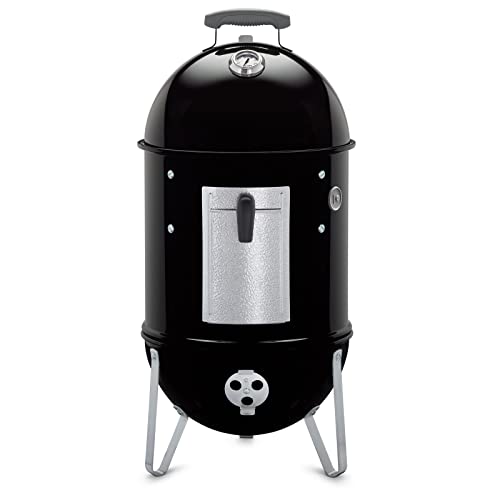
Bullet Smoker by Weber

The lid thermometer just jumped 30 degrees, or it will not climb past 200 no matter how far you open the vents, and there is a rack of ribs or a brisket already on the grate. This is the moment most Weber Smokey Mountain owners actually search for help, not while reading a spec sheet before buying one. The fix depends on which problem you have, running hot, running cold, or bouncing between the two, so start by figuring out which one you are looking at.

Figure Out Which Problem You Actually Have First

Every WSM temperature complaint falls into one of three buckets. Match your situation to the right one below, then jump to that section. Chasing the wrong fix wastes charcoal and stresses out a cook that would have been fine left alone.

  • Running hot. The gauge climbed past your target and keeps going, usually right after you added meat or closed the lid.
  • Running cold. You cannot get it above 200 to 210°F even with every vent wide open.
  • Bouncing around. It swings from 210 to 260 and back over the course of an hour, never settling anywhere.

The Smoker Is Running Too Hot

A hot WSM is almost always one of four things. You lit too much charcoal at the start and gave the fire more fuel than it needed. A wood chunk landed on top of the lit coals instead of buried inside the unlit ring, so it flared instead of smoldering. The door or lid is not seated all the way, and outside air is feeding the fire in a spot the dampers cannot control. Or wind is gusting straight into an open bottom vent and force feeding the fire oxygen.

Close the bottom dampers about halfway rather than snapping them shut, then leave the smoker alone for 15 to 20 minutes. Charcoal fires respond slowly, and a fire that looks unchanged after five minutes is often already cooling, you just cannot see it yet on the gauge. Do not pour water on the coals to bring the number down fast. It cracks the porcelain water pan over repeated use and coats your food in wet ash. If the spike happened right when you added meat, that is normal and usually settles on its own within 20 minutes as the cold meat pulls heat out of the chamber.

The Smoker Will Not Climb High Enough

A WSM that will not get above 200°F with every vent open usually has a specific, findable cause rather than a mysterious one. Ash left over from the last cook piles up under the charcoal grate and blocks airflow before it ever reaches the fire. A water pan filled with cold tap water acts as a heat sink and pulls warmth out of the chamber for the first hour. Cold or windy weather strips heat off the thin steel walls faster than the fire can replace it. Or there simply was not enough lit charcoal in the chimney to begin with.

Knock the ash out from underneath before your next cook rather than mid cook, since disassembling a hot smoker to clean it is not worth the trouble once food is already on. Fill the water pan with hot tap water instead of cold, which removes an hour of the smoker fighting its own heat sink. Open the bottom vents fully and give the fire time to respond instead of adding more unlit charcoal on top of a fire that just needs airflow.

If cold weather is the recurring problem rather than a one-time issue, an insulation wrap solves it directly instead of forcing you to fight the weather every single cook.

A blanket like this wraps around the 18-inch WSM and cuts the wind chill and heat loss that make winter cooks burn through nearly double the charcoal of a summer cook at the same temperature. It also doubles as a weather cover when the smoker is not in use, so it earns its cost back in saved fuel over a season of cold-weather cooks.

The Temperature Will Not Sit Still

Bouncing temperatures are usually self-inflicted. Charcoal fires respond to a vent change on a 15 to 20 minute delay, so adjusting again before that window passes means you are always reacting to a change you already made, not to the fire’s actual current state. Make one small adjustment, then physically walk away for 20 minutes before touching a vent again.

The built-in lid thermometer makes this worse because it commonly reads 25 to 50°F off from the actual temperature at grate level, where your food sits. Chasing a number that is already wrong guarantees overcorrection. A dual-probe digital thermometer fixes this by reading the real grate-level temperature and the meat temperature at the same time, so your vent decisions are based on what is actually happening at the food.

This is worth owning specifically because of the dual probes, not just for the wireless range. One probe clipped to the grate tells you the real pit temperature instead of the lid gauge’s guess, and the second tracks the meat, so you stop making vent changes based on stale or inaccurate data.

When the Real Cause Is a Leak, Not the Fire

If you have addressed charcoal amount, ash, water temperature, and wind and the smoker is still unpredictable, check the aluminum access door. It is the single most common point of failure on a stock WSM. The door does not seal tightly from the factory, and smoke visibly escaping around its edges means outside air is entering in a spot no damper can control, which explains both random spikes and a fire that runs cooler than the dampers suggest it should.

A gasket kit like this uses Nomex material and high-temperature adhesive to seal both the door and the lid. Installation takes about 30 minutes with scissors and no drilling, which matters if you would rather not modify the smoker permanently. Once it is sealed, your dampers become the only thing controlling airflow, and most of the unpredictable swings stop.

Smoking on a Windy Balcony, in a Small Yard, or on a Tight Budget

Not every fix requires buying something. If wind is the issue and you are on an apartment balcony or a small patio with no room to relocate the smoker, turn the whole unit so the bottom vents face away from the prevailing wind, and use whatever is already there, a patio wall, a railing, even a piece of plywood propped up, as a windbreak. It works nearly as well as a dedicated product and costs nothing.

If a digital thermometer is not in the budget right now, you can still work around the lid gauge. Run one empty test cook, note how far off the gauge reads compared to where your food actually finishes cooking, and mentally adjust for that offset on every future cook until you can afford the upgrade. It is not as accurate as a real probe, but it beats guessing blind.

Renters and anyone who might sell or move the smoker later do not need to worry about the gasket kit affecting resale. It is a stick-on modification to the smoker itself, not the property, and it is one of the few upgrades serious WSM owners consider worth doing before the first cook rather than after a bad one.

What Not to Do When the Temperature Is Off

  • Do not pour water directly on the coals to cool things down fast. It cracks the porcelain water pan over time and dumps ash onto your food.
  • Do not lift the lid repeatedly just to look at the fire. Every peek lets heat and smoke escape and adds real time to the cook.
  • Do not close every vent completely to kill a hot fire. It smothers the coals unevenly and makes the next relight harder than it needs to be.
  • Do not dump a pile of fresh unlit charcoal onto an already hot fire. It usually overshoots the temperature further before it settles.

The One Fix That Solves Most WSM Temperature Complaints

Most smokers labeled unpredictable are not actually broken. They are leaking air past the door, choked by ash from the last cook, or being read by a lid gauge that was never accurate to begin with. Seal the door, empty the ash before every cook, and get an accurate grate-level reading, and the vent adjustments you already know how to make will start working the way they are supposed to.

If you are still deciding which size WSM to buy in the first place, or want the full rundown on setup, accessories, and how it stacks up against other smokers, see our complete Weber Smokey Mountain buying guide. For a broader look at Weber’s current smoker and grill lineup beyond the WSM, our Weber grill guide covers the rest of the range, and our smoker thermometer buyer’s guide covers more probe options if the dual-probe pick above is not the right fit for your setup.

Last update on 2026-08-10 / Affiliate links / Images from Amazon Product Advertising API

This post contains affiliate links, which means I may receive a small commission, at no extra cost to you, if you make a purchase using these links.

All Things Backyard Editorial Staff

Editorial Staff at All Things Backyard is a team of Home, BBQ, Grilling, Gardening experts led by Jay Kang. Trusted by thousands readers worldwide.