

If you walked away from last night’s cookout covered in fresh bites while the people sitting next to you barely got touched, it was not bad luck or the wrong lawn chair. Researchers estimate that somewhere between 20 and 30 percent of people are measurably more attractive to mosquitoes than everyone else, and there is now a fairly specific list of testable reasons why. Most of it comes down to body chemistry you did not choose and cannot easily change, which means the real fix is not a diet swap or a different seat at the table. It is picking a repellent strategy built for a body mosquitoes already prefer.
This has been studied directly, not guessed at. Below is what the research actually shows about why some people get swarmed and others walk away clean, what does not hold up once you look for evidence, and what to actually do about it if you are one of the unlucky ones.
Why mosquitoes pick you over the person next to you
Skin bacteria and the acids your body gives off
The strongest recent evidence points to skin chemistry, not blood or sweat volume alone. A study out of Rockefeller University tracked the same group of people over several years and found that the ones mosquitoes consistently preferred produced significantly higher levels of carboxylic acids in the oily layer on their skin. Those acids come from skin bacteria breaking down sebum, and the pattern held steady for individual people even as their skin microbiome shifted over time, which points to something closer to genetics than habit or hygiene. This is a more precise explanation than the old “some people are just tastier” line, because it identifies an actual chemical signature mosquitoes are keying in on.
Blood type and whether your skin broadcasts it
Research on blood type is thinner but still worth knowing. One frequently cited study found mosquitoes landed on people with type O blood about twice as often as on people with type A, with type B falling in between. Separately, roughly 80 percent of people are “secretors,” meaning their skin chemically signals their blood type to anything sniffing for it, mosquitoes included. The other 20 percent do not send that signal at all. If you are a type O secretor, you are working against two factors at once, and neither one is something a bug spray brand can market a fix for beyond a strong repellent.
Carbon dioxide, body heat and size
Mosquitoes track carbon dioxide from up to 30 or 40 feet out, long before they can smell or see anyone. The more CO2 a body exhales, the easier it is to find, and exhaled CO2 tracks roughly with body size. That is a real part of why adults get bitten more than small children, and why a larger person standing next to a smaller one at the same barbecue tends to draw more attention. Once a mosquito closes in, body heat and skin moisture take over as the short range cues that guide it to a landing spot.
Sweat, exercise and what is actually in it
Sweat carries lactic acid, ammonia and uric acid, all compounds mosquitoes use to zero in on a target. Exercise ramps up production of all three, which is part of why finishing a run or mowing the lawn right before sitting outside tends to invite more bites, on top of the higher body temperature exercise leaves behind. Some people naturally produce more of these compounds regardless of activity level, which is one more piece of the puzzle that has nothing to do with what they ate that day.
Clothing color, alcohol and pregnancy
A few smaller factors stack on top of the chemistry. Dark and high-contrast colors, black, navy and red in particular, make it easier for mosquitoes to pick you out visually once they are within a few feet, so lighter neutrals at an evening event are a small, free edge. Drinking beer has also been linked to a higher bite rate in more than one study, though researchers still are not sure exactly why, since it does not appear to be about ethanol showing up in sweat. Pregnancy raises both body temperature and exhaled CO2, which is why pregnant women are documented to draw more bites, and why the CDC specifically calls out repellent use as safe and recommended during pregnancy rather than something to avoid.
What does not actually move the needle
Garlic, bananas and vitamin B supplements show up constantly as home remedies, and none of them have held up under controlled testing. Studies specifically designed to test garlic and vitamin B1 as mosquito deterrents found no meaningful difference in bite rates between people who took them and people who did not. Cutting sugar or changing your diet in general is not backed by evidence either, despite how often it gets repeated. If a fix does not show up in a repellent aisle or a peer reviewed study, treat it as folklore rather than a plan for this weekend’s cookout.
What to actually do if you are the one everyone blames for bringing mosquitoes
Since you cannot change your blood type, your skin bacteria or how much CO2 you naturally exhale, the fix is matching the right repellent to how you actually spend time outside, rather than hoping this season is different.
For direct, all evening protection while you’re doing yard work, watching kids play, or camping, a 20 percent picaridin repellent like Sawyer Products 20% Picaridin Insect Repellent is worth keeping in a bag rather than buying only when you remember. It holds up for roughly 12 hours per application, does not leave the greasy film DEET does, and will not damage synthetic gear or swimsuits the way high concentration DEET can. For someone whose body chemistry is already working against them, a repellent that needs reapplying every two hours defeats the purpose. One that lasts most of a day does not.
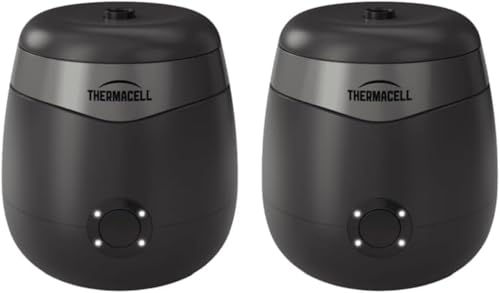
For group settings, a dinner on the patio, a backyard birthday party, an evening where spraying repellent on every guest is not realistic, a zone repeller solves a different piece of the problem. The Thermacell E65 Rechargeable Mosquito Repeller builds a roughly 20 foot mosquito free zone around wherever it sits, using an EPA registered active ingredient dispersed into the air rather than applied to skin. That matters specifically for renters or anyone with a small patio, since it needs nothing more than an outlet or a charge, no yard-wide chemical treatment and no landlord conversation. Being the mosquito magnet in the group stops being everyone else’s problem once the zone is running.
If budget is tight, start with the picaridin spray before spending on a zone device. A single bottle runs under 15 dollars and solves the day to day version of this problem for most people. Save a zone repeller or a broader yard treatment plan for the nights you are actually hosting. If the mosquito problem in your yard is bigger than any one gathering, something that needs weeks of pressure rather than one good spray, a set of mosquito traps run continuously over several weeks will bring the overall population down instead of just protecting you personally for one evening. And if young kids are the ones getting bitten hardest at your house, the concentrations and application rules are different enough from adult use that it is worth reading through separately rather than guessing.
Why mosquitoes seem to go for your ankles and head
Beyond who gets bitten, mosquitoes also show a preference for where. Research on biting location found two common species favor the head and feet specifically, likely because both areas carry a higher concentration of sweat glands and run slightly warmer than the rest of the skin. If you are covering up for an evening outside, those two spots are worth the extra attention, socks over sandals is not just a fashion compromise, it is a targeted fix.
If you are one of the roughly one in five people mosquitoes go after first, stop chasing diet fixes that have never held up under testing. Carry a 12 hour picaridin repellent for anytime you are outside for more than twenty minutes, and add a zone repeller for the nights you are hosting or sitting still on a patio. That combination addresses the actual chemistry your body produces instead of hoping this summer goes differently on its own.
Last update on 2026-11-10 / Affiliate links / Images from Amazon Product Advertising API
This post contains affiliate links, which means I may receive a small commission, at no extra cost to you, if you make a purchase using these links.


