

No. And the honest reason has almost nothing to do with the part of the fire you can still see. Most people asking this are standing on a patio somewhere around eleven at night, looking at a bowl with no flames left in it, just an orange glow under a layer of grey, thinking the hard part is already over. It is not. That glowing coal bed is the whole problem, and it will still be hot enough to start something long after the last flame is gone.
So this page is not a lecture about fire safety in general. It is what actually happens in the eight hours you are asleep, why the standard advice to “pour water on it” wrecks certain fire pits, and how to shut a fire down in ten minutes instead of forty when you are already tired and want to go inside.
What Is Actually Still Burning When the Flames Are Gone
A flame is wood gas burning in the air above the fuel. When the flames drop, the volatile gases are mostly spent and what is left is a bed of charcoal, and charcoal burns hotter and far longer than the flame stage that came before it. A wood coal bed sits well above the ignition point of dry grass, cedar mulch, a pine deck board, and a nylon chair cushion. Our breakdown of how hot a fire pit gets covers the numbers, but the practical version is simple. A fire that “looks out” is often the hottest sustained heat source in your yard.
Then the ash makes it worse. Ash is an insulator. It settles over the coals and holds heat in rather than letting it dissipate, which is exactly why fire departments across the country warn that buried coals can stay live for several days after a fire, not several hours. The NFPA attributes roughly ten thousand structure fires a year in the United States to ashes that somebody believed were cold. Those fires do not start at the fire pit. They start in a garage, a plastic bin, or a paper bag two days later.
The Three Ways an Overnight Fire Pit Actually Causes Damage
Older advice on this question tends to focus on an animal knocking the pit over. That is a rare failure. Here is what really happens, in rough order of frequency.
Wind lifts embers out of the bowl. Overnight is when wind conditions change without anybody watching. A breeze that was nothing at nine o’clock picks up at two in the morning, hits an open coal bed with no screen on it, and lofts glowing fragments across the yard. If those land on dry lawn, a mulch bed, or a wood deck, they can smolder for a long time before anything visible happens. Mulch is the worst offender here because it smolders internally rather than flaming, so nothing looks wrong until it does.
Radiant heat cooks whatever is too close. A pit that has been safely radiating heat for three hours with people around it has also been getting checked and adjusted for three hours. Leave the same heat pouring at a vinyl fence panel, a siding wall, a resin storage box, or a patio umbrella pole all night and there is nobody to notice the smell. Distance is the fix, and if you have never actually measured yours, our guide to how far a fire pit should be from a house gives you the number your local code most likely uses.
The morning cleanup goes into the wrong container. This is the one that catches careful people. You wake up, the pit is grey and cold on top, you shovel it into a trash bag or a plastic tote so the yard looks tidy before work. A live coal was down in there. That is the single most common way a backyard fire ends up as a house fire, and we walk through the full timeline in our guide to disposing of fire pit ashes.
Being Asleep Counts as Leaving It Unattended
This part matters more than most people realize, because it changes what happens after an incident rather than before one. Section 307 of the International Fire Code, which the large majority of US municipalities adopt in some form, states that recreational fires shall be constantly attended until the fire is extinguished. It also requires that a means of putting the fire out, a garden hose, a water barrel, dirt or sand, or a rated extinguisher, be available for immediate use the entire time the fire is burning.
Sleeping inside the house is not attending the fire. If a fire spreads from an unattended pit, you are on the wrong side of the local ordinance, and that is the detail an insurance adjuster and a fire marshal will both land on. Some jurisdictions add curfew hours, some add wind speed limits, and burn bans can go into effect overnight during a dry stretch without you hearing about it. Our guide on whether backyard fire pits are legal covers how those local rules typically get written and what actually triggers a fine.
Put It Out Without Cracking Your Fire Pit
Almost every answer to this question ends with “pour water on it,” and that advice is wrong for at least two of the three fire pits people own. Water is the fastest and most complete way to kill a coal bed, but thermal shock is real, and dumping five gallons onto steel or stone at full temperature is how bowls warp and masonry cracks. Match the method to what you own.
Thin steel bowls and cheap ring pits
These are the ones a hose ruins. A stamped steel bowl under about 2 mm thick will cup, warp at the rim, and pop its paint if you flood it hot, and the seams are usually the first thing to open up. Spread the coals flat across the bottom with a poker so they stop feeding each other, wait ten to fifteen minutes for the glow to drop, then wet them down gradually rather than in one dump. Sprinkle, stir, sprinkle again. You want steam, not a violent boil.
Masonry, stone and paver built pits
Water is a slower problem here but a more expensive one. Repeated soaking drives moisture into block and mortar, and in any climate with a freeze cycle that water expands and spalls the face off the stone over a couple of winters. Sand or dry dirt is the better routine tool for a masonry pit. Keep a bucket of playground sand next to it, spread the coals, then bury them. Sand smothers by cutting off oxygen and it does not shock the stone. Use water on a masonry pit when you genuinely need speed, not as the default every weekend.
Smokeless stoves
Check the manual before you do anything, because most double wall smokeless stoves specifically tell you not to pour water into a hot unit. Water gets between the walls of the burn chamber, has nowhere to drain, and takes the stainless finish and eventually the airflow holes with it. The intended shutdown on these is to let the fire burn down inside the stove, which is faster than a conventional pit because the secondary combustion consumes fuel efficiently, then leave the unit outdoors on its stand until morning. If you want a pit you can walk away from sooner, that design difference is worth understanding before you buy, and our smokeless fire pit roundup notes which models include a lid and stand so the burn down happens in a sealed unit rather than an open bowl.
Stop Feeding the Fire Before You Want It Out
Here is the habit that solves this problem permanently, and it costs nothing. The reason shutdown feels like a chore is that people add a final log at ten thirty and then want to be in bed by eleven. Work backward instead.
A single split hardwood log takes roughly 45 minutes to an hour to burn down to a manageable coal bed. Softwood goes faster. So the last log goes on about an hour before you want to be inside, and once it is on, that is the end of the fire, no matter who asks. Then at the 45 minute mark you spread the remaining coals into a single layer with a poker instead of leaving them stacked. Spreading is what does the real work, because a heaped coal bed insulates itself and keeps its own core hot, and a flat layer sheds heat several times faster.
Do those two things and the whole shutdown becomes a five minute job with a little water rather than a forty minute standoff. If you regularly want the fire to run later than everyone’s patience, our guide to keeping a fire pit going all night covers the fuel loading side of the same problem from the other direction.
Gas and Propane Fire Pits Are a Different Question
If you own a propane pit, the answer changes shape. There is no coal bed and no ember risk at all, which removes the main hazard this entire page is about. What replaces it is a smaller but sharper set of issues.
Never leave a gas fire pit running while you sleep either, for a reason that has nothing to do with sparks. A wind gust can blow out a low flame while gas keeps flowing, and unburned propane is heavier than air, so it pools in the bowl and along the ground instead of dispersing upward. That is a genuine hazard on a covered patio or in a sunken seating area. Close the knob, then close the valve at the tank itself. The knob alone leaves the regulator and hose pressurized all night, and a slow hose leak is the failure mode people never check for.
One more thing that catches people. Do not put a fabric cover or a burner lid on a gas pit that has just been running. The burner pan, lava rock and fire glass hold serious heat for a good while after shutoff, and covers are the most common thing melted onto a fire table.
If your household is the kind that keeps drifting into “can we just leave it,” the fuel type is the real fix. A propane pit goes from full flame to genuinely off in the two seconds it takes to close a valve, with no coal bed, no ash bucket, and nothing to check in the morning. Our roundup of the best portable propane fire pits is the place to start if that trade sounds worth making, and our comparison of a gas fire pit against a wood burning one lays out what you give up in return.
Two Things Worth Owning If This Question Keeps Coming Up
Most of what fixes this is habit rather than gear. Two items genuinely change the risk, though, and both are cheap relative to the thing they prevent.
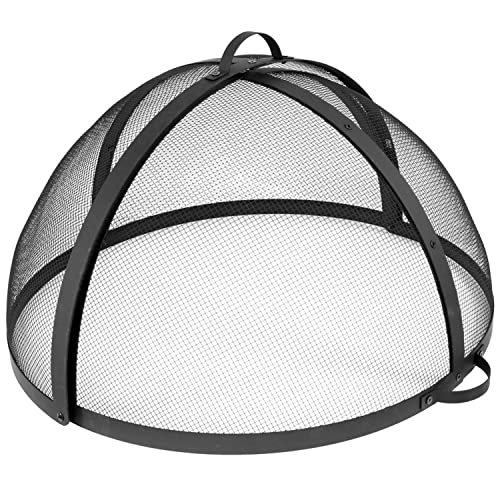
A mesh spark screen is the one accessory that directly addresses the wind and ember failure described above, and the detail that matters is the hinged door. Plain dome screens have to be lifted off entirely every time you want to touch the fire, which is exactly why they end up leaning against a fence unused. A screen with a door lets you spread the coals during the burn down without removing anything, so it stays on during the part of the evening when it matters most. Size it to the outside lip of your bowl and go one size up rather than down, since a screen resting on the fire is worse than no screen at all. Be realistic about the trade too. Any screen cuts the radiant warmth you feel, so it earns its place if kids or dogs circle the pit, if you burn softwood that pops, or if your pit sits near a deck or siding. We go deeper on that call in our guide to fire pit tools and accessories worth buying.

The second is a lidded metal ash can, and the specs that count are metal body, tight fitting lid, and a bail handle. This is not about tidiness. The lid starves any hidden coal of oxygen instead of feeding it, which is the entire point, and a 5 gallon size means one weekend of ash goes in without you compressing it down and burying live embers deeper. Whatever you buy, the rule after loading it is the same. Set the can on bare soil or concrete, away from the house, the deck and the garage, and leave it there for several days before the ash goes anywhere near a trash bin.
If You Rent, Have a Deck, or Answer to an HOA
Renters and deck owners. You do not have the option of leaving anything smoldering, and you probably cannot pour five gallons of ash water onto a wood deck either. Sand in a lidded bucket is the better kit here, since it kills the coals without a flood. Put a proper insulated fire pit mat underneath, not a single layer of fiberglass cloth, and read our take on whether a fire pit can go on a deck before the first burn rather than after.
No outdoor spigot or a long hose run. Fill two 5 gallon buckets before you light the fire and set them next to the pit. That also satisfies the code requirement for extinguishing equipment being immediately available, which a hose coiled up around the side of the house does not.
Dogs and small kids. The overnight risk is not the only one. A cooled pit is still hot enough to burn a paw or a hand the next morning, and a dog will walk through grey ash without hesitating. If the pit lives somewhere the family passes, put the screen on after shutdown, not just during the fire.
Small yards and HOA rules. A tight yard usually means the pit is closer to a fence, a shed or a neighbor’s property line than the code number allows, and that is the situation where an overnight ember has somewhere to land. Many HOAs also restrict wood burning outright while permitting gas, so check the covenant before buying a wood pit rather than after the first complaint. Where the pit sits changes almost everything about this, and our guide to where to put a fire pit in your yard covers the spots to rule out first.
What to Do Right Now If You Are Reading This at Midnight
- Stop adding fuel. Anything you put on now extends this by another hour.
- Spread the coals flat with a poker so they are one layer deep, not a pile.
- Wait ten minutes. This is the step people skip, and it is what prevents warping a steel bowl.
- Add water slowly and stir between pours, or bury the bed in sand if the pit is masonry or on a deck.
- Keep going until there is no hiss, no steam, and no heat coming off the surface when you hold a hand above it.
- Leave the ash in the pit. Do not shovel it out tonight, and do not shovel it tomorrow either.
Total time if you started the process early enough is about ten minutes. If you skipped straight to step four with a full coal bed, expect closer to half an hour and a lot of steam.
The Short Version
Put the last log on an hour before you want to go inside, spread the coals flat at the 45 minute mark, and the fire will be genuinely out with a few cups of water rather than a bucket. That one change is worth more than any accessory on this page, because it removes the moment where leaving it burning starts to feel reasonable. If your evenings keep ending in that moment anyway, buy a propane pit instead of a better hose, and let the shutdown be a valve you turn.
Last update on 2026-10-07 / Affiliate links / Images from Amazon Product Advertising API
This post contains affiliate links, which means I may receive a small commission, at no extra cost to you, if you make a purchase using these links.


