

You bought the corn, you are already fifteen minutes into a cookout that other people are watching, and every recipe you pull up gives you a different number. Some say 10 minutes, some say 30. If you undershoot it the kernels are starchy and crunchy in the middle. If you leave the packets on too long while you are handling burgers on the other side of the grate, you end up with mushy, waterlogged corn that nobody reaches for twice. The real issue is not “how long,” it is that the time depends on four things most articles skip over: your heat source, whether you are cooking direct or indirect, how many ears are on the grill at once, and whether the corn is shucked or still wrapped in its husk. Once you account for those, the timing stops being a guess.
How long to grill corn in foil, by heat and quantity
These times are for shucked ears wrapped individually in foil with butter or oil, over medium-high heat. Add 3 to 5 minutes if the corn is still in its husk before foiling, since the husk adds another layer of insulation the heat has to work through.
| Setup | Heat | Time | Turn every |
|---|---|---|---|
| Gas grill, direct heat | 400 to 450°F | 15 to 20 minutes | 4 to 5 minutes |
| Gas grill, indirect (2 to 3 dozen ears for a crowd) | 350 to 400°F | 25 to 30 minutes | 7 to 8 minutes |
| Charcoal, direct over coals | Medium-high (hand test 4 to 5 seconds) | 12 to 16 minutes | 3 to 4 minutes |
| Charcoal, banked to one side, indirect | Medium (hand test 6 to 7 seconds) | 20 to 25 minutes | 6 to 7 minutes |
Charcoal runs hotter and less evenly than gas, which is why the direct-heat charcoal time is shorter even though it feels like it should be the slower method. If your coals have been burning for a while and have started to gray over and cool, add 3 to 4 minutes across the board. If you are grilling more than 8 ears at once, the packets closest to the edges of the grate will run a few minutes behind the center ones, so rotate their positions along with turning them.
Why the time range online is so wide
Most recipes quote somewhere between 10 and 30 minutes and leave it there, which is not wrong, it is just incomplete. The spread comes from a few variables stacking on top of each other. Husk-on corn cooks slower than shucked corn because the husk has to steam through first. A single loose foil wrap traps less heat than a tight double wrap, so tight wrapping shaves a couple of minutes off. Jumbo ears (the extra-large sweet corn common in late summer) can run 5 minutes longer than standard ears. And a grill lid that stays open while you check on things loses heat every time, which adds up over a dozen checks. None of that means the timing is unreliable, it means “how long” only has an honest answer once you know your own setup, which is the point of the table above.
The two-stage method for char without a burnt-through packet
If you want the roasted, lightly charred flavor that husk-grilled or open-grate corn gets, but still want the moisture and easy cleanup of foil, cook in two stages instead of one. Foil-wrap and grill over indirect heat for the first two-thirds of the time from the table above, until the kernels are tender when you press a packet. Then open the foil, brush the exposed corn with butter, and move it directly over the heat, uncovered, for 2 to 3 minutes, turning once, just to pick up color and light char on the kernel tips. You get a fully cooked, juicy ear with real grill marks instead of a pale, steamed one, and you are not gambling on whether an all-foil cook will scorch the packet before the inside catches up.
How to tell it is done without relying on the clock
Time is a starting point, not a guarantee, so check doneness the same way each time. Squeeze a packet with tongs (never bare hands, foil holds heat far longer than you expect). A done ear gives slightly under pressure and feels plump, not hard. Open one packet at the earliest time in the range and pierce a kernel near the middle of the cob with a fork. It should pop and release liquid rather than feeling starchy or resistant. If it is not there yet, reseal the foil (it does not need to be airtight) and give it another 3 to 5 minutes rather than committing the whole batch to more time based on one undercooked ear.
What actually makes this easier
Three pieces of gear solve most of the friction people run into with foil-grilled corn, and none of them are specialty items you will only use once a summer.
Heavy-duty non-stick foil. Standard foil works, but the butter and any sugar in the corn’s natural juices will stick to plain foil as it caramelizes, tearing the packet when you try to unwrap it. A heavy-duty non-stick foil, such as Reynolds Wrap Heavy Duty Non-Stick Aluminum Foil, holds up to turning without puncturing and releases the corn cleanly instead of pulling half the browned butter off with the wrapper.
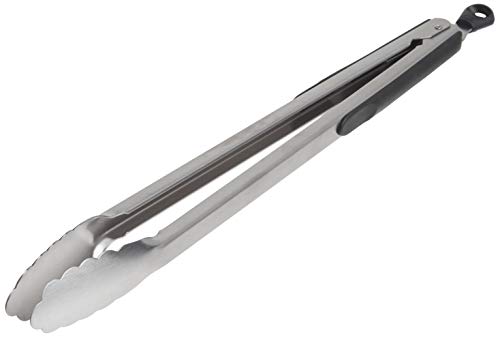
Long, locking tongs for a gas grill. The OXO Good Grips 16″ Stainless Steel Locking Tongs have a scalloped edge that grips a foil packet firmly enough to turn it without puncturing the wrap, and the length keeps your hand away from a 400°F-plus grate. The locking mechanism also means you can set them down between turns without them falling open on a hot surface.
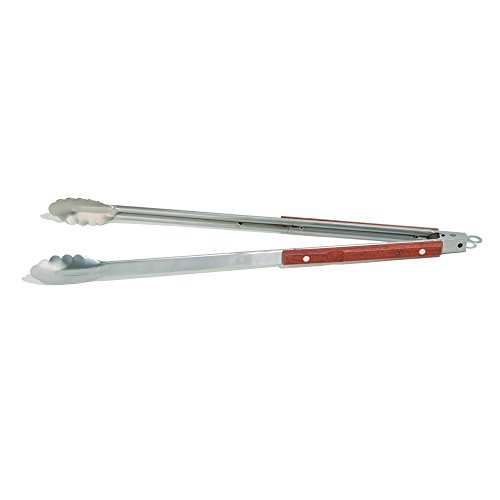
Extra-long tongs for charcoal. If you are working over a kettle grill with coals banked to one side, the 22-inch Outset Jackson-Redwood tongs give you enough reach to turn packets sitting over direct coals without leaning over the heat, and the rosewood handle stays cool to the touch even after repeated trips back and forth to the hot zone, which plain stainless handles do not. For a full rundown of what to look for in length, grip, and lock style, our guide to the best grill tongs covers the tradeoffs in more depth.
Common problems and fixes
- Soggy or waterlogged corn. Usually means too much butter or liquid sealed inside a tight packet with no way for steam to escape. Leave one end of the foil loosely folded instead of crimped shut, or vent a small opening after the first 10 minutes.
- Foil tearing when you flip it. Double-wrap in two layers of standard foil, or use a single layer of heavy-duty non-stick foil, and always turn with tongs rather than a spatula edge that can puncture the wrap.
- Butter flare-ups. Melted butter leaking through a foil seam onto direct flame is the most common flare-up cause with this dish. Crimp the seam at the top of the packet, not the side facing the flame, and keep a lid partially closed to starve any flare-up of oxygen instead of leaving the grill wide open.
- Some ears done, others not. This is almost always a hot-spot issue rather than a timing issue. Rotate packets from the edges of the grate to the center partway through, not just end over end.
Edge cases people run into
- Frozen corn on the cob. Skip thawing. Wrap it straight from frozen and add 8 to 10 minutes to the times above, checking a bit earlier since frozen ears vary more in actual internal temperature than fresh ones.
- Small tabletop or balcony grill. These run hotter near the burner and cooler at the edges than a full-size grill. Keep packets moving between zones every few minutes rather than leaving them in one spot, and expect the low end of the direct-heat time range since these grills are usually working with less total grate space and more concentrated heat.
- No foil on hand. Husk-on grilling is the workaround. Pull the silk out but leave the husk on, soak the ear in water for 10 minutes so the husk does not catch fire, and grill over medium heat for about 20 minutes, turning occasionally. It will not have quite the same buttery result as a foil packet, but it solves the immediate problem.
- Cooking ahead for a party. Foil-grilled corn holds well. Grill it up to an hour ahead, keep the packets sealed, and set them at the cool side of the grill or in a warm oven (200°F) until serving. To reheat leftovers the next day, rewrap in fresh foil and warm on the grill or in a 350°F oven for about 10 minutes.
FAQ
How long do you grill corn in foil at 400 degrees?
At 400°F over direct heat, plan on 15 to 20 minutes, turning every 4 to 5 minutes. Check the earliest ear at the 15 minute mark by piercing a kernel near the center of the cob.
Is it better to grill corn in foil or in the husk?
Foil gives you more control over seasoning since butter, garlic, or herbs stay sealed against the kernels, and cleanup is easier since the foil catches the drips. Husk-on grilling gives a slightly smokier flavor but needs a water soak first and is harder to season mid-cook. Neither is wrong, they solve different priorities.
Can you overcook grilled corn in foil?
Yes. Past about 30 minutes total, kernels start to dry out and toughen even inside foil, since the moisture that steams the corn early on eventually cooks off. If you are holding corn warm for a crowd, keep the grill on low or move packets off direct heat rather than leaving them cooking the whole time.
Do you need to soak the foil or oil it before wrapping corn?
No soaking is needed since foil does not absorb water like a husk does. A light coating of butter or oil directly on the corn before wrapping is enough to keep it from sticking to the foil as it cooks.
Last update on 2026-10-07 / Affiliate links / Images from Amazon Product Advertising API
This post contains affiliate links, which means I may receive a small commission, at no extra cost to you, if you make a purchase using these links.


